The Most Important Position? The Rise of the Modern Fullback
The Greatest Tactical Shift
Twenty years ago, the fullback was the least important player on the pitch. In the traditional 4-4-2 system, their job was simple: "Stop the winger." They were defenders first, who occasionally crossed the halfway line if the game was comfortable. Jamie Carragher famously once said: "No one wants to grow up and be a Gary Neville."
Today, that quote has aged poorly. In the modern game, the fullback is often the most important player on the pitch—the creative hub, the primary source of width, and the tactical "Swiss Army Knife" of the manager.
The Three Archetypes of the Modern Fullback
1. The "Wing" Playmaker
This player is effectively a winger who starts from a deep position. They provide the team's width and are the primary crossers of the ball.
- Masters of the Craft: Trent Alexander-Arnold and Andrew Robertson. At Liverpool, these two were often the team's top assist-makers. By attacking from deep, they are harder for opposition defenses to track than stationary wingers.
2. The "Inverted" Fullback
Popularized by Pep Guardiola, this player moves into the center of the midfield when their team has the ball.
- Tactical Purpose: This creates a "box" in midfield, giving the team numerical superiority and helping them control possession. It also provides extra protection against counter-attacks.
- Masters of the Craft: Joao Cancelo and Oleksandr Zinchenko.
3. The "Defensive" Buffer
The traditional role hasn't completely disappeared. Some managers prefer one "attacking" fullback and one "stay-at-home" defender to maintain a back-three structure when attacking.
- Masters of the Craft: Kyle Walker. While he has elite pace, his primary value is his ability to use that pace to recover and stop counter-attacks before they start.
The Physical Demands
The modern fullback role is arguably the most physically demanding in professional sports.
- Volume and Intensity: They must cover the entire length of the pitch for 90 minutes. Tracking data shows that fullbacks often perform more high-intensity sprints than any other position.
- Technical Versatility: They must be as comfortable tackling in their own box as they are playing a 40-yard diagonal pass or shooting from distance.
Why Has the Role Changed?
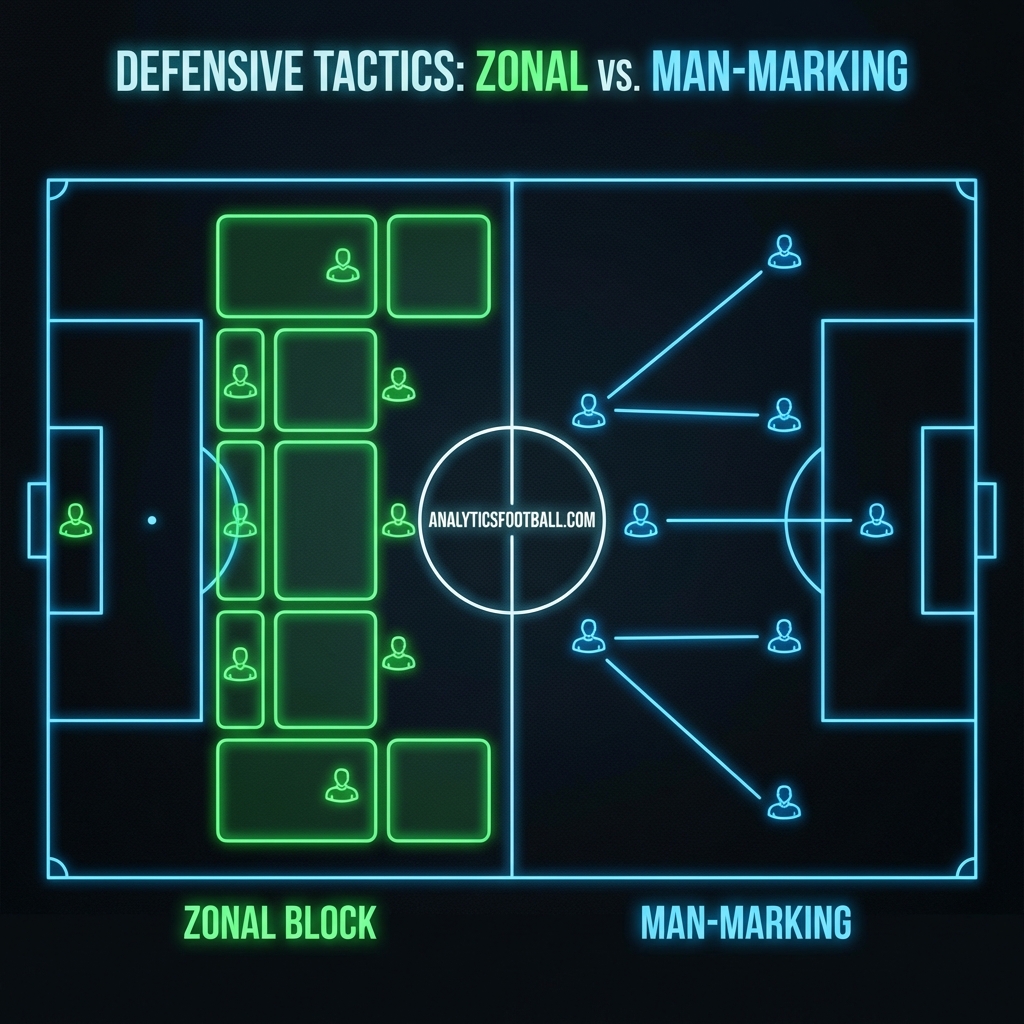
The shift is a direct result of teams becoming more compact and "central" in their defensive blocks. When ten defenders are packed into the middle of the pitch, the wings are the only places left to find space. By using fullbacks to attack those wings, managers can stretch a defensive block, creating gaps in the middle for their strikers.
The Future: The Positionless Defender
We are now seeing players who defy even these categories. We see center-backs who can play as inverted fullbacks and midfielders who can drop into the back four. As tactical systems become more fluid, the concept of a fixed "position" is fading. However, the requirement for a player who can defend the flank and dominate the attack remains the cornerstone of modern tactics.
Conclusion
The fullback is no longer a luxury or an afterthought; they are the engine of tactical innovation. From the "Trequartista Fullback" to the "Midfield Hybrid," these players have redefined what it means to be a defender. In today's football, if you want to win, you don't just need a great striker—you need a brilliant fullback.
Share this guide
Use Data to Win
Now that you understand the stats, see them in action. Check out the best defensive teams in Europe right now.
View Defensive Stats