
The Visionary's Stat: Understanding Expected Assists (xA)
The Flaw of the Standard Assist
In the world of football statistics, the "Assist" is one of the most misleading numbers. Why? Because an assist is entirely dependent on the quality of the person taking the shot, not the person who made the pass.
Example 1: Player A plays a 50-yard "miracle" pass that puts the striker one-on-one with the keeper. The striker misses. Player A gets 0 assists. Example 2: Player B plays a simple 2-yard sideways pass to a teammate. That teammate then proceeds to dribble past four defenders and scores a wonder-goal from 40 yards. Player B gets 1 assist.
Which player was more creative? The standard stat says Player B. Expected Assists (xA) says Player A.
What is Expected Assists (xA)?
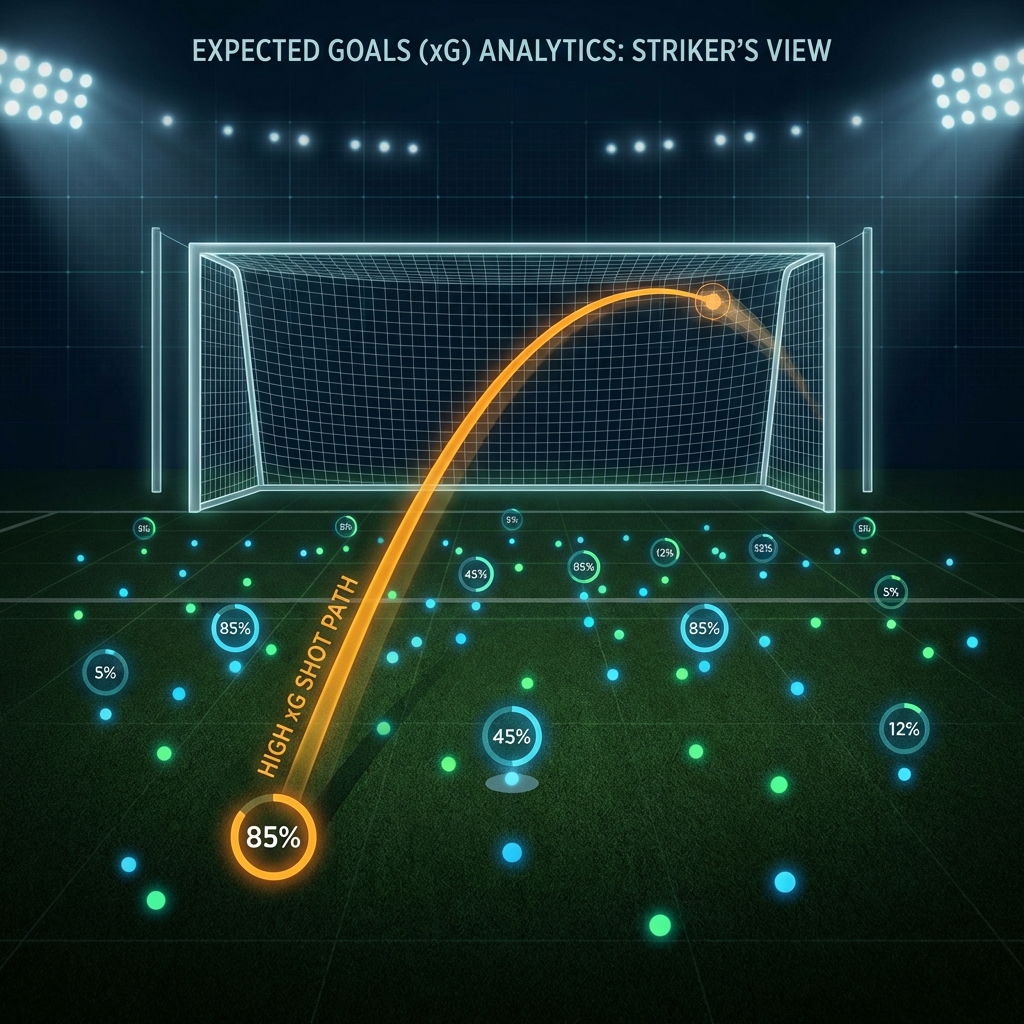
xA is a metric that measures the likelihood that a given pass will become a goal assist. It is calculated based on the probability that the resulting shot will be scored.
Crucially, xA is assigned at the moment the pass is made, regardless of what happens next. It doesn't matter if the striker misses the shot, if the goalkeeper saves it, or even if the striker fails to take a shot at all (in some models). xA rewards the "intent" and the "quality" of the chance created.
How xA is Calculated
Data providers analyze thousands of passes to determine the xA value. Key factors include:
- Type of Pass: A through-ball generally has a higher xA than a cross.
- Distance and Angle: A pass into the "six-yard box" has a much higher xA than a pass to the edge of the area.
- Phase of Play: A pass made during a fast counter-attack typically has a higher xA because the defense is disorganized.
- Endpoint: Where exactly the receiver receives the ball. A ball delivered to a striker's feet in the center of the goal is worth more than a ball delivered to their head.
Why Social Media and Scouts Love xA
xA is the ultimate "fairness" metric for creative midfielders. It allows us to identify players who are creating world-class chances for poor teams.
- Spotting Underperformers: If a player has 8.5 xA but only 2 actual assists, it tells us that they are doing their job perfectly, but they are being let down by their strikers. This is a common situation for playmakers in mid-table teams who eventually get "discovered" by bigger clubs.
- The "Luxury" Playmaker: Some players have very high actual assists but low xA. This suggests they are "stat-padding"—playing simple passes to elite finishers who do all the hard work themselves.
The Masters of xA
In the last decade, players like Kevin De Bruyne, Bruno Fernandes, and Lionel Messi have consistently ranked at the top of xA charts. They don't just rely on their teammates to be good; they create situations where the chance is so high-quality that a goal becomes statistically likely.
On Format, you can track xA for players across the top five European leagues. Using this data allows you to see the "real" creative force behind a team’s performance.
Conclusion
xA has transformed how we value midfielders. It has moved the conversation away from the final result and onto the process of creation. By valuing the pass for its own merit, we can finally appreciate the vision of the architect, even when the builder fails to complete the job. xA is the metric that proves vision is a measurable skill.
Share this guide
Use Data to Win
Now that you understand the stats, see them in action. Check out the best defensive teams in Europe right now.
View Defensive Stats